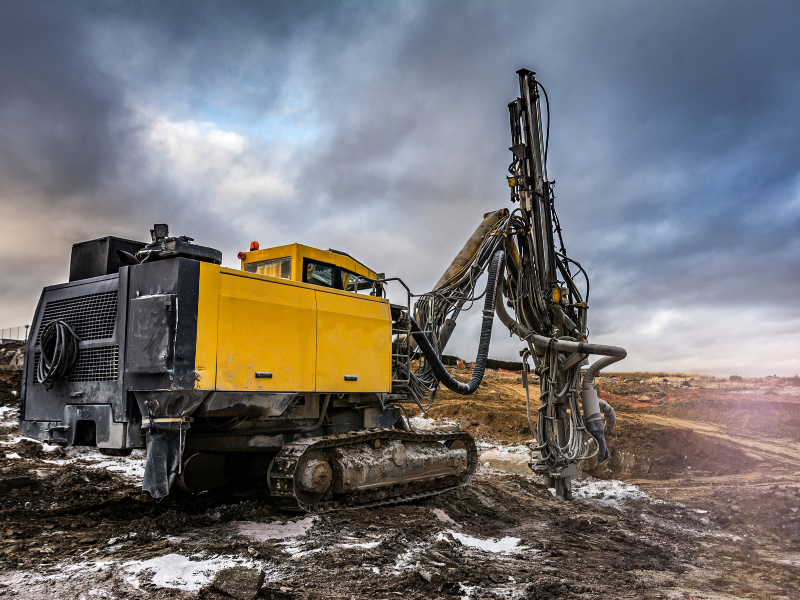
Mining industry contains various operations, one of which is drilling. Drilling is the first and most critical step in both exploration and production phases. It allows companies to identify mineral deposits, analyze rock formations, and prepare the site for blasting and extraction. Accurate drilling improves operational efficiency and reduces unnecessary costs. It also plays an important role in safety by ensuring controlled and planned excavation processes. Skid-mounted rigs, hooks, drawworks, rotary tables, swivels, hydraulic power tongs, casing scrapers, drilling pipes, choke manifolds, and other equipment sets and drill machines for mining are widely used in modern mining projects. These systems are designed to deliver precision, durability, and high performance under challenging field conditions. You can see advanced drilling technologies and equipment solutions in Mining Türkiye Fair 2026 at Tüyap Fair and Congress Center on 8-11 April. Book your stand to take your place among exhibitors!
Drilling Rigs
Drilling rigs are the core systems used in mining exploration and production activities. They are designed to penetrate rock formations and create boreholes for sampling, blasting, or resource evaluation. Mining drill machines must operate under tough field conditions such as uneven terrain, extreme temperatures, and high vibration levels. Therefore, durability and stability are key factors in rig design. Modern drilling rigs are equipped with hydraulic systems, automated controls, and safety mechanisms that improve precision and reduce operational risks. Depending on the project scope and site conditions, different rig configurations are preferred. Some rigs are fixed and provide high stability, while others are mobile and allow flexible operation across large mining areas. Selecting the right drilling rig directly affects drilling speed, accuracy, and overall project efficiency.
- Skid-Mounted Rig: A fixed drilling system installed on a stable base. It offers strong structural support and is suitable for long-term and high-capacity drilling operations.
- Mobile Drilling: A flexible drilling system mounted on trucks or tracks. It allows easy transportation between drilling points and is ideal for exploration activities.
Solid Control System, Equipment and Spares
Solid control systems are among the core drilling machines for mining and used to manage drilling fluids and remove unwanted solids during operations. In mining and core drilling activities, drilling mud plays a critical role in cooling the drill bit, stabilizing the borehole, and carrying cuttings to the surface. If solids are not properly separated, equipment performance may decrease and operational costs may increase. A well-designed solid control system improves fluid efficiency, extends equipment life, and supports safer drilling conditions. These systems work continuously during drilling operations and require durable components that can withstand abrasive materials and high circulation rates.
- Sand Pump: Transfers drilling fluid and solids mixture within the circulation system.
- Mud Mixer: Blends drilling fluids to achieve the required density and consistency.
- Mud Tank: Stores and circulates drilling mud during operations.
- Poorboy Degasser: Removes gas from drilling fluids to maintain pressure balance and safety.
Pipe-Handling Tools
Pipe-handling tools are essential for connecting, disconnecting, and securing drilling pipes during operations. These tools help crews manage heavy tubular components safely and efficiently. Proper pipe handling reduces manual workload and minimizes accident risks. In modern drilling sites, hydraulic systems are commonly used to increase torque control and improve precision. Reliable pipe-handling equipment ensures smooth workflow, especially in deep drilling projects where frequent pipe connections are required.
- Hydraulic Power Tong: Applies controlled torque to tighten or loosen drilling pipes.
- Manual Tongs: Hand-operated tools used for pipe gripping and turning.
- Safety Clamps: Secure pipes in place to prevent accidental dropping.
- Elevator: Lifts and supports drilling pipes during hoisting operations.
Drilling Tools
Drilling tools are the direct contact components that penetrate rock formations. Their quality and design directly affect drilling speed, accuracy, and wear resistance. These tools must withstand high pressure, friction, and temperature during operation. Selecting the right drilling tool depends on rock type, depth, and project objectives. Advanced material technology and cutting-edge designs improve performance and reduce downtime in mining drilling projects.
- Casing Scraper: Cleans the inside walls of casing pipes to remove debris and cement residue.
- Drilling Pipe: Connects surface equipment to the drill bit and transfers torque and fluid.
- PDC Drilling Bit: Uses polycrystalline diamond cutters for high-performance rock penetration.
To see and meet the drill machine companies in person to broaden your professional network, see our online ticket options now!
Well Control Equipment
Well control equipment is among the most important mining drill equipment and designed to manage pressure and prevent uncontrolled fluid release during drilling operations. Maintaining pressure balance is critical for operational safety and environmental protection. These systems help detect abnormal pressure changes and allow operators to respond quickly. Properly installed well control equipment reduces blowout risks and ensures compliance with safety standards. It is considered one of the most important safety layers in drilling activities.
- Annular BOP: Seals around drill pipes to control well pressure.
- Choke Manifold: Regulates fluid flow and pressure during well control operations.
- Double-Ram BOP and Drilling Spool: Provides additional sealing and pressure control capability.
Types of Drilling in Mining
The number of drilling methods in mining increases as the technology advances in the industry. Below are the main drilling methods used in the mining sector.
- Auger Drilling: A shallow drilling method commonly used in soft soil and unconsolidated materials. It is suitable for preliminary exploration and environmental sampling.
- Rotary Air Blasting: Uses compressed air to remove rock cuttings from the borehole. It is widely used for mineral exploration in hard rock formations.
- Diamond Core Drilling: Produces high-quality cylindrical core samples. It is preferred for detailed geological analysis and resource estimation.
- Aircore: A cost-effective exploration method that uses compressed air to collect lightweight samples from soft to medium formations.
- Reverse Circulation Drilling: Provides consistent and uncontaminated samples by circulating cuttings through inner tubes. It is commonly used in mineral resource evaluation.
- Blast Hole Drilling: Creates holes for placing explosives in production mining. It is essential for controlled rock fragmentation.